














Quality 4.0
The Digital Evolution of Total Quality Management
Quality 4.0 does not replace Total Quality Management. It extends it.
Total Quality Management remains the managerial foundation of quality: customer focus, leadership, people engagement, process discipline, continuous improvement and evidence-based decision-making.
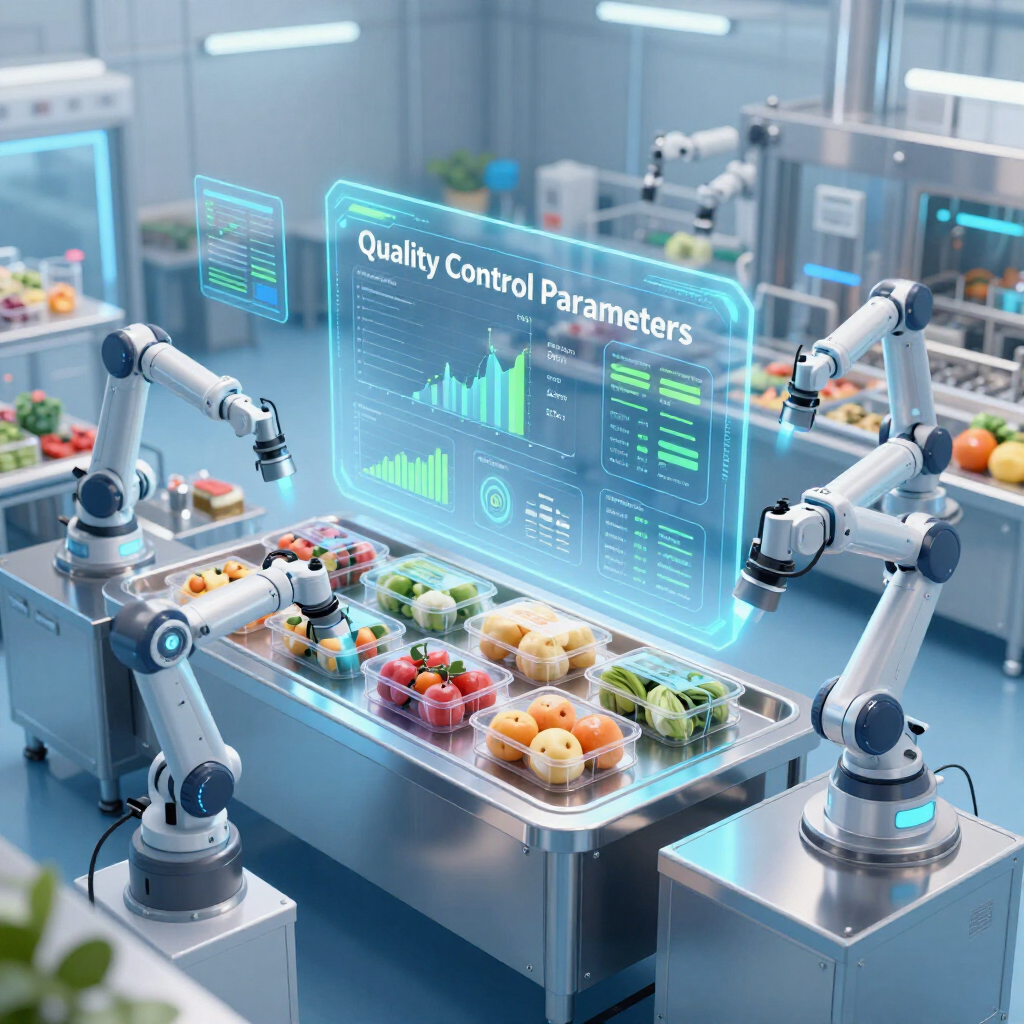
Quality 4.0 builds on this foundation by adding the capabilities of the digital era: real-time data, cloud platforms, AI/ML, IIoT, digital traceability, automated workflows, predictive analytics and closed-loop feedback.
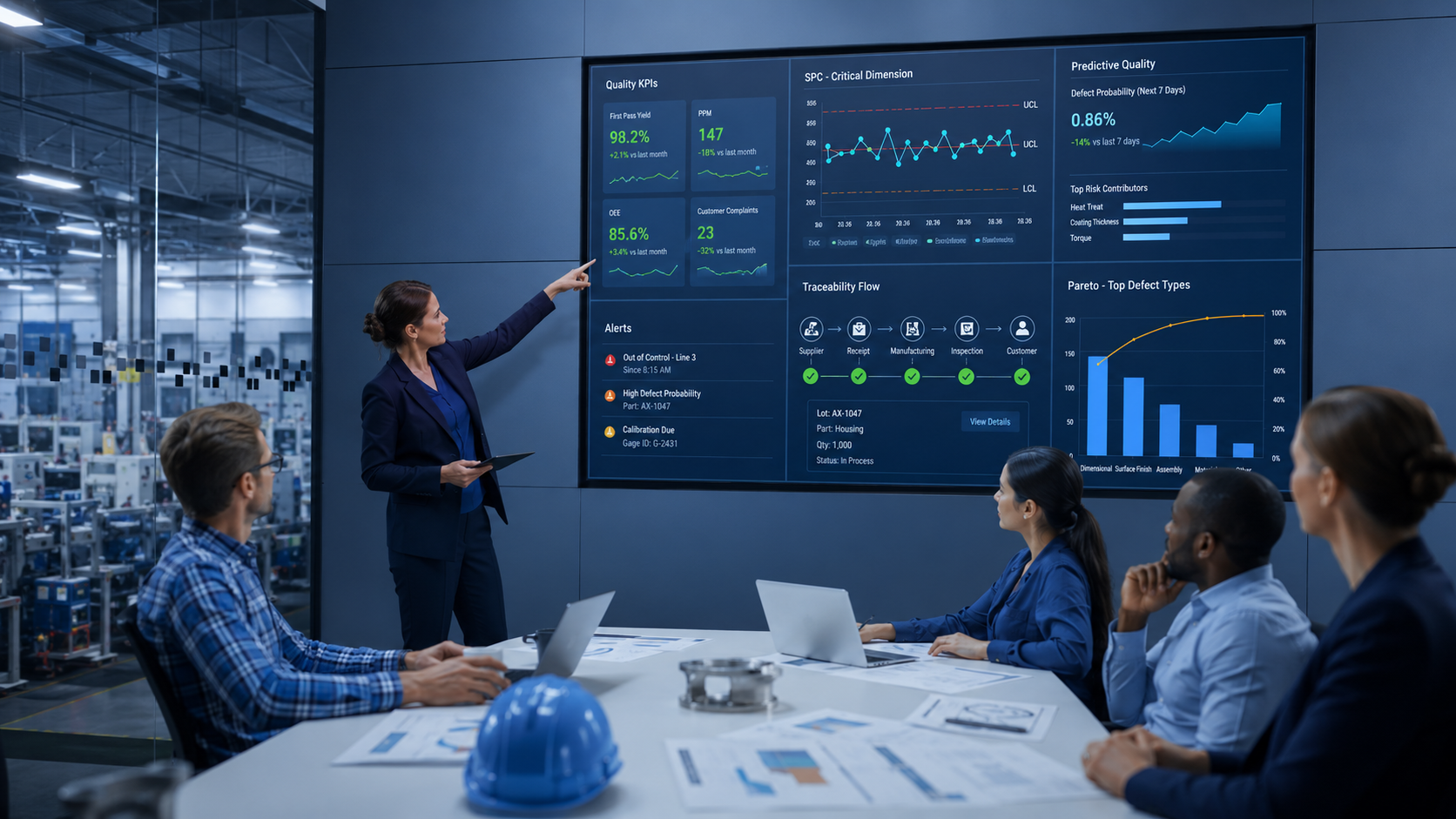
The result is a new quality operating model: one that moves quality from retrospective control and documentation to real-time visibility, prevention, prediction and operational resilience.
From Control to Prediction
In traditional quality systems, many activities are based on periodic checks, sampling, manual documentation, audits and corrective actions after an issue has occurred.
Quality 4.0 changes this logic.
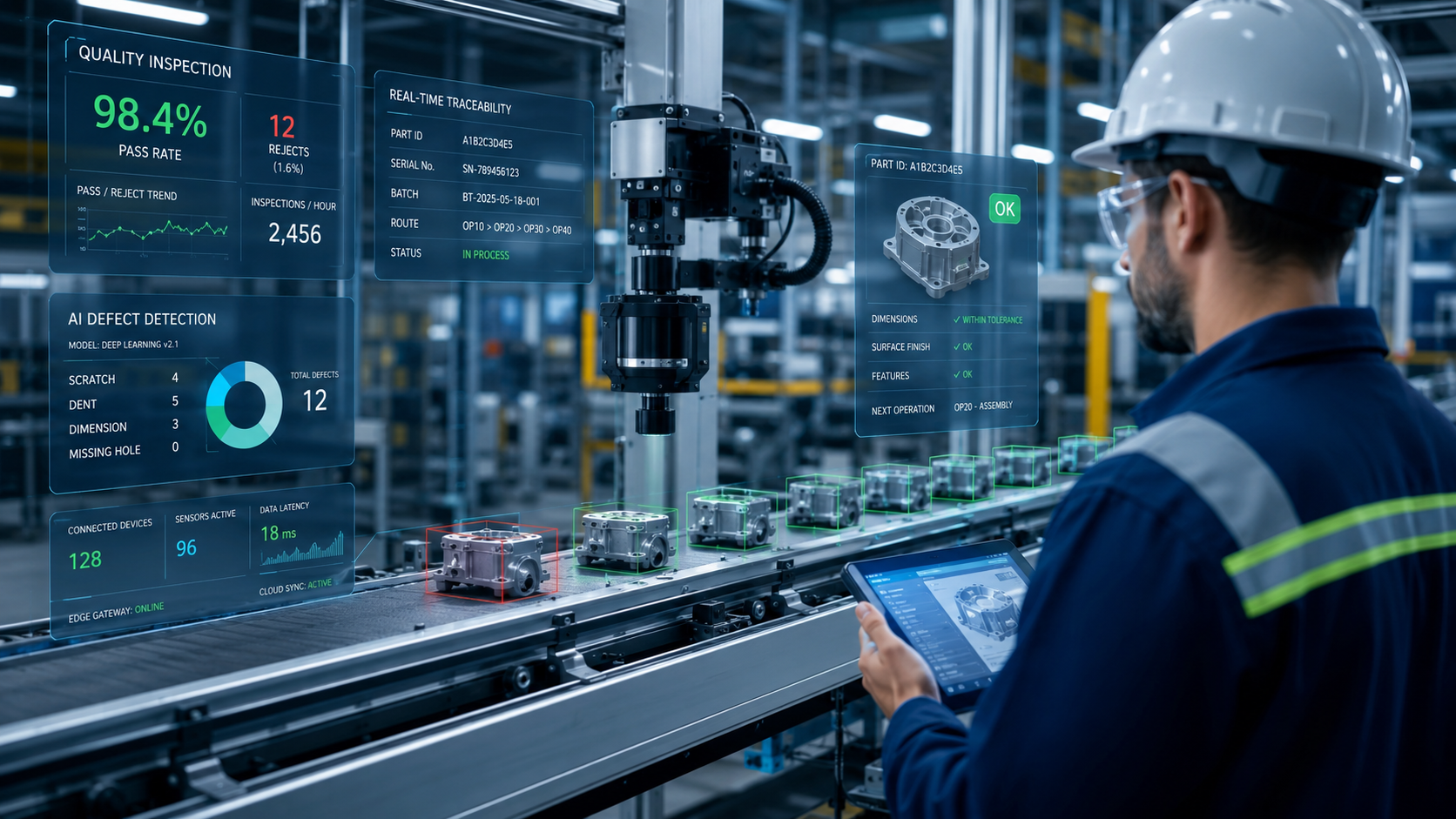
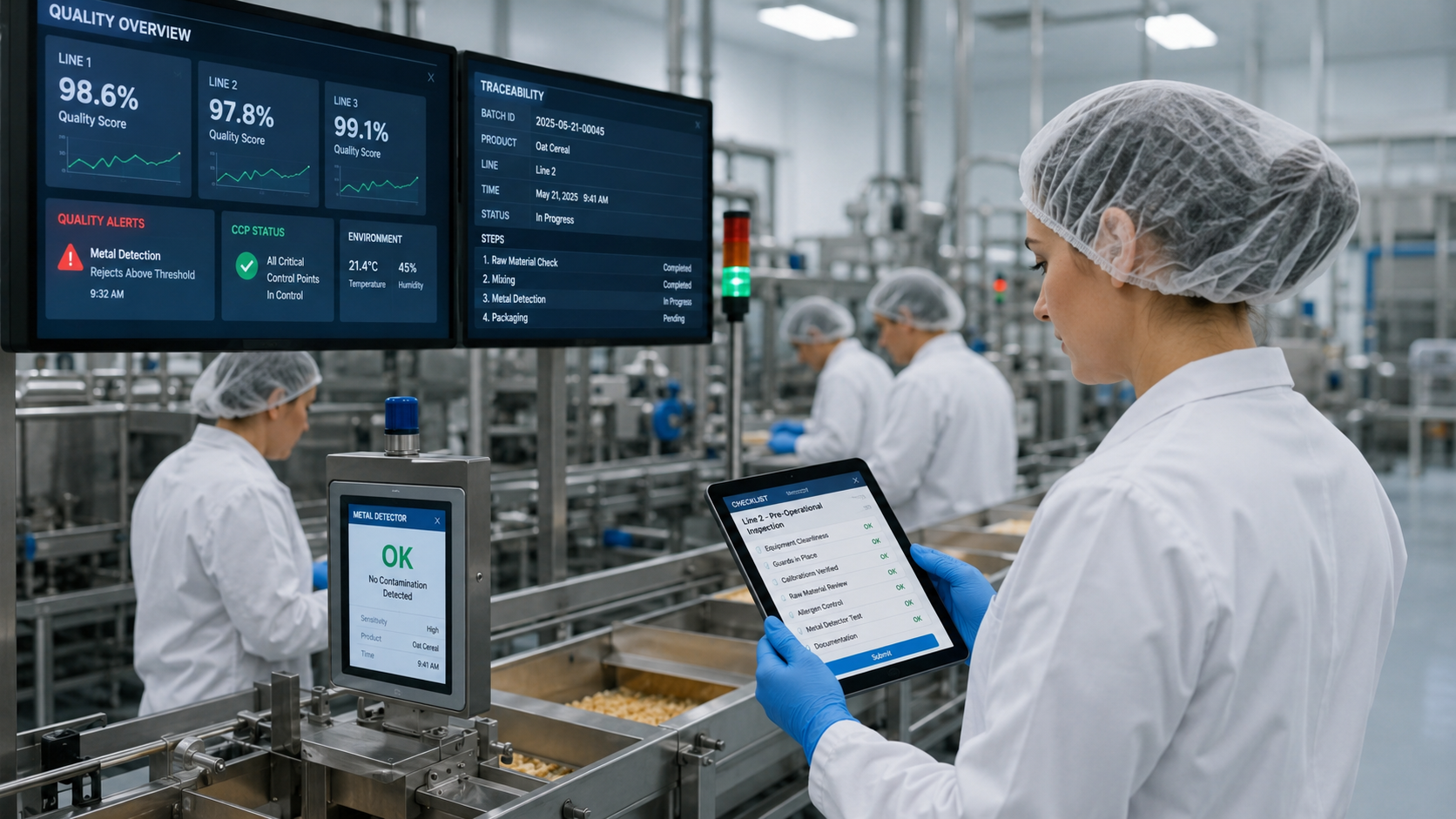
Critical quality data can be captured continuously. Deviations can be identified faster. Corrective actions can be triggered and documented digitally. Management can gain direct visibility into what is happening across processes, sites, teams and critical control points.
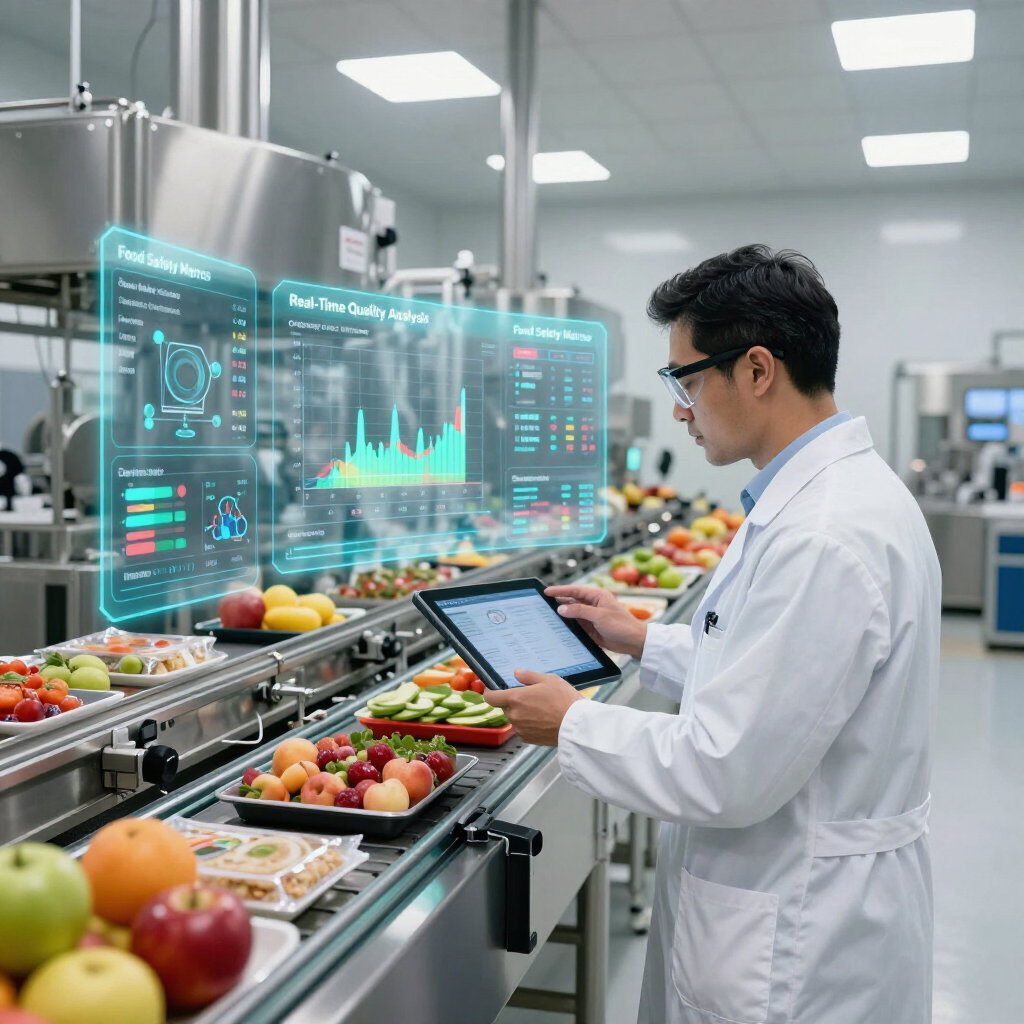
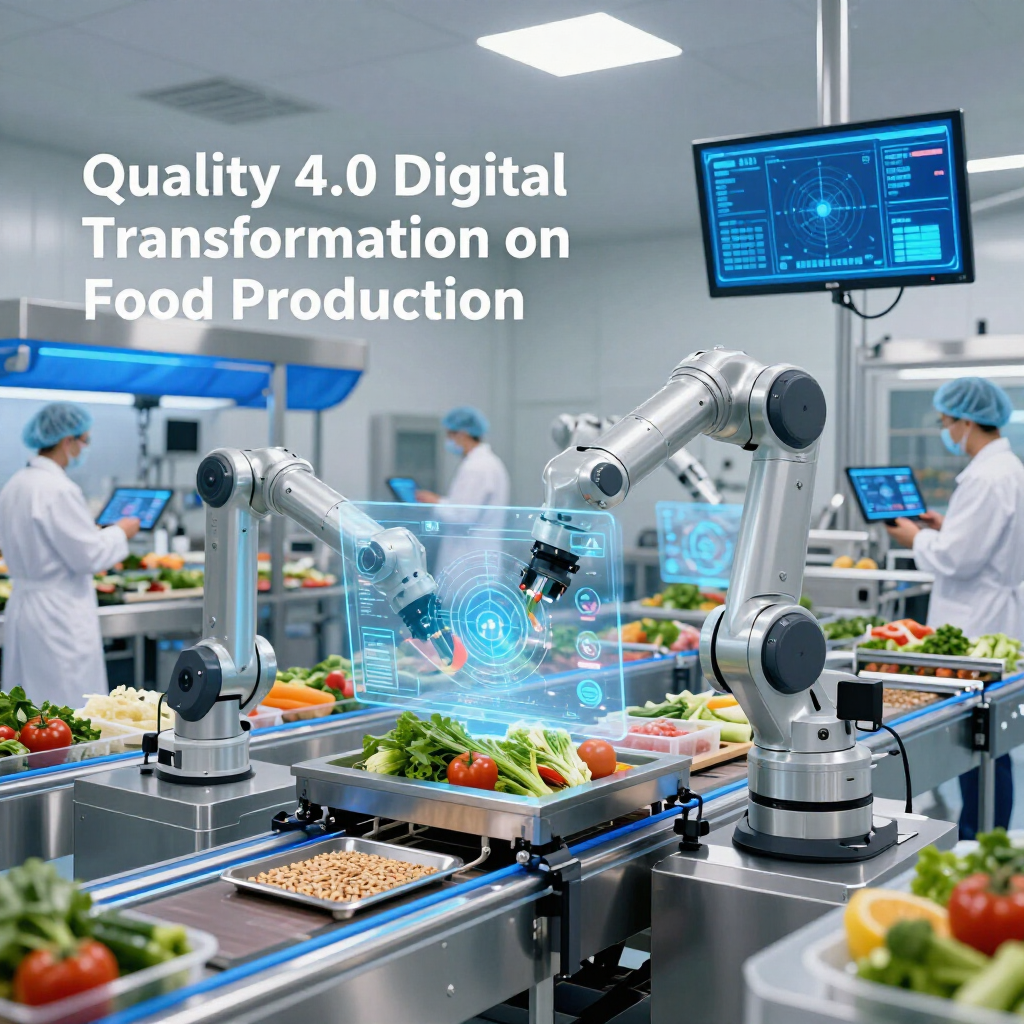
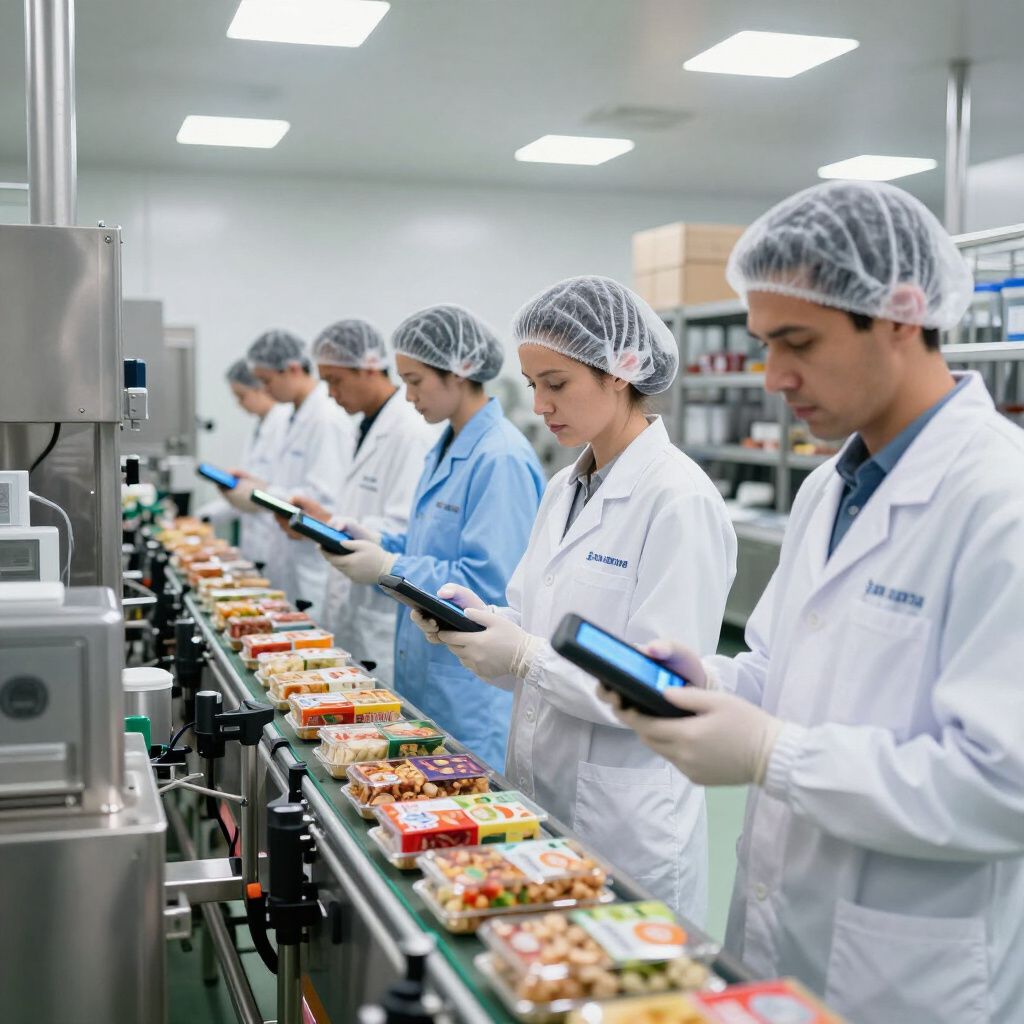
For food production, catering, hospitality, healthcare nutrition and regulated operations, this shift is not only about technology. It is about compliance, traceability, operational speed, audit readiness, customer trust and risk reduction.
TQM vs Quality 4.0
DimensionTotal Quality ManagementQuality 4.0Main objectiveProcess stability, customer satisfaction, continuous improvementThe same objectives, enhanced with real-time prevention, prediction and digital transparencyDataPeriodic data collection, reports, auditsContinuous data flows, dashboards, alerts and analyticsDocumentationPaper forms, spreadsheets, QMS filesDigital workflows, audit trails, structured records and traceabilityControl modelSampling, inspections, CAPA after the eventPredictive quality, automated alerts and closed-loop corrective actionsTechnologiesSPC, audits, ERP/QMS documentationCloud, AI/ML, IIoT, computer vision, integrations, cybersecurityRole of qualityControl and compliance functionCross-functional orchestrator between Quality, Operations, IT/OT and Management
The right question is not “TQM or Quality 4.0?”
The right question is: how can we digitalize TQM without losing its managerial discipline?
Why Quality 4.0 Matters Now
There is not yet a single official global metric for “Quality 4.0 adoption”. For this reason, adoption is usually assessed through enabling technologies such as AI, cloud, IIoT, smart manufacturing and analytics.
The available indicators show that the transition is already underway:
IndicatorLatest signalWhat it means for Quality 4.0AI adoption in OECD firms20.2% of firms used AI in 2025, up from 8.7% in 2023AI is moving from experimentation to business useAI adoption in EU enterprises19.95% of enterprises used AI in 2025Adoption is becoming mainstream, but remains unevenCloud adoption in the EU52.74% of enterprises used paid cloud services in 2025Cloud is becoming a core infrastructure for digital qualitySmart manufacturing59% of manufacturers actively use smart manufacturing technologiesThe market is moving from pilots to scale-upAI/ML in manufacturing29% of manufacturers use AI/ML at facility or network levelPredictive analytics and automation are entering industrial operations
The practical conclusion is clear: companies do not need to start by “buying AI”. They need to start by identifying the quality processes that must become more measurable, traceable, reliable and faster.
A Practical Roadmap to Quality 4.0
Quality 4.0 should be treated as a quality operating model transformation, not as an isolated IT project.
| Phase | Objective | Key actions |
|---|---|---|
| 1. Baseline | Understand the current quality reality | Measure defects, complaints, CAPA delays, audit findings, traceability gaps and cost of poor quality |
| 2. Digital foundation | Build a common digital process and data layer | Digital forms, workflows, cloud access, master data, integrations and access control |
| 3. Critical use cases | Prove value in specific processes | Digital inspections, CCP checks, CAPA, alerts, batch traceability and dashboards |
| 4. Scale-up | Avoid pilot purgatory | Roll out across lines, sites or brands, with training, governance and standardization |
| 5. Predictive quality | Move from reactive to preventive quality | Analytics, trend detection, AI-assisted root cause analysis and predictive alerts |
The Technology Stack Behind Quality 4.0
A realistic Quality 4.0 environment usually includes five layers:
| Layer | Description |
|---|---|
| Data capture & connectivity | Sensors, mobile data entry, IIoT, PLC/SCADA interfaces |
| Core systems | QMS, MES, ERP, LIMS, task and compliance platforms |
| Analytics & intelligence | Dashboards, SPC, anomaly detection, AI/ML, predictive analytics |
| Experience layer | Mobile workflows, role-based alerts, digital work instructions, operational checklists |
| Trust layer | Cybersecurity, access control, data governance, audit trails and model governance |
KPIs for Measuring the Transition
| Category | Indicative KPIs |
|---|---|
| Quality outcome | Defect rate, PPM, complaints, returns |
| Response speed | CAPA closure time, containment-to-resolution time |
| Traceability | Traceability coverage, batch visibility, audit trail completeness |
| Digital adoption | % of digital checks, usage frequency, frontline adoption |
| Cost of quality | Scrap, rework, cost of poor quality |
| Governance | Data standard coverage, access control, cybersecurity incidents |
A practical rule: if the first 9–12 months do not show improvement in at least one outcome KPI and two adoption or speed KPIs, the implementation may be technologically interesting but operationally incomplete.
| Business need | Digital response |
|---|---|
| Proof of compliance | Digital records, audit trails and structured evidence |
| Control of critical points | Structured tasks, alerts, responsibilities and escalation |
| Traceability | Connection of actions, users, time, batch, site or control point |
| Faster response | Immediate recording of deviations and corrective actions |
| Management visibility | Dashboards, KPIs, reports and real-time operational view |

Quality 4.0 and DIGITASK / DIGIHACCP
The transition to Quality 4.0 does not need to start with a large and complex transformation project. It can start from the critical daily processes of quality, compliance and operational control.
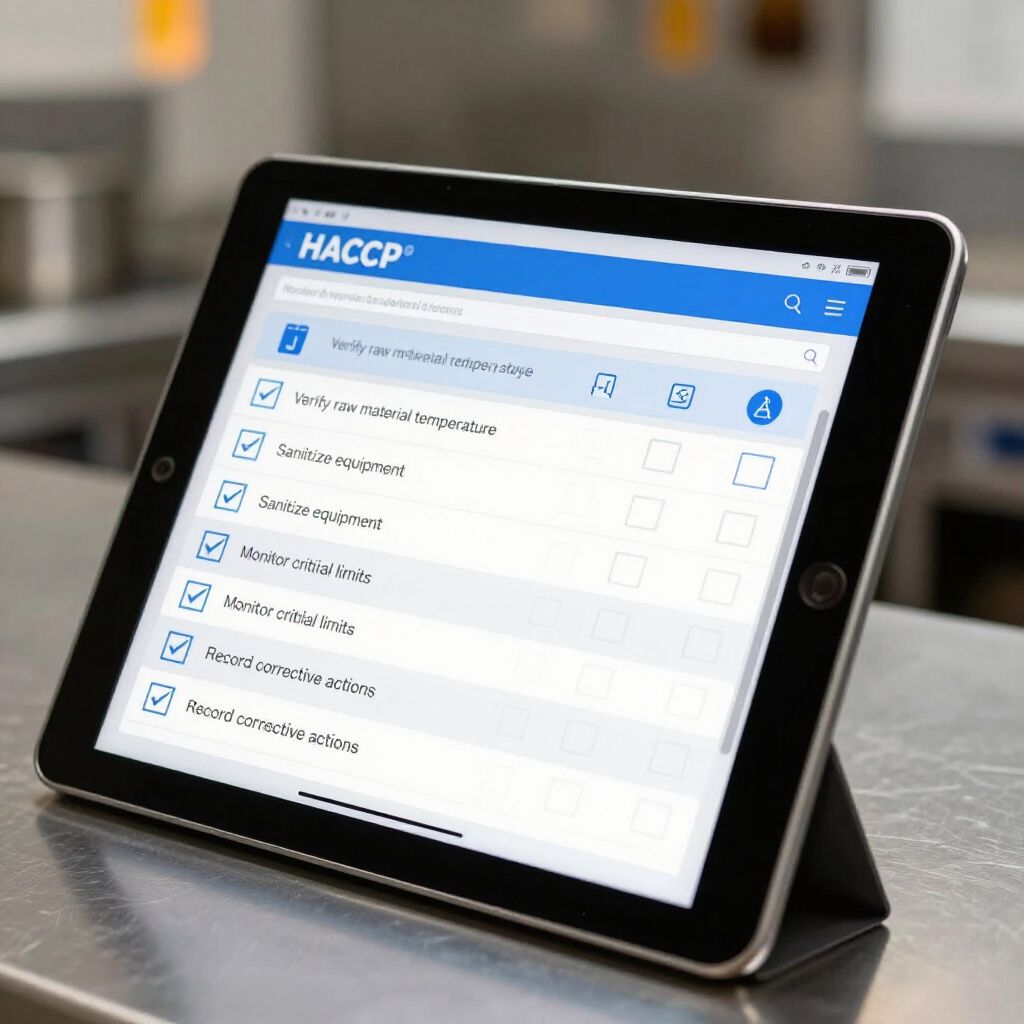
DIGITASK and its vertical food safety solution DIGIHACCP operate as an Execution & Compliance Layer.
They help organizations move checks, forms, corrective actions, approvals, documentation and traceability from manual or fragmented processes into a controlled, digital and measurable environment.
Business need Digital response Proof of compliance Digital records, audit trails and structured evidence Control of critical points Structured tasks, alerts, responsibilities and escalation Traceability Connection of actions, users, time, batch, site or control point Faster response Immediate recording of deviations and corrective actions Management visibility Dashboards, KPIs, reports and real-time operational view
This allows quality to move beyond static documentation and become a daily mechanism for execution, control, learning and improvement.
Conclusion
Total Quality Management established the foundation: quality across the organization, people engagement, process discipline, continuous improvement and evidence-based decision-making.
Quality 4.0 adds the digital layer: real-time data, connected processes, predictive analytics, automated documentation and operational transparency.
The real value is not in technology alone. It is in the way technology strengthens the quality operating model.
Quality 4.0 means quality that is connected, measurable, preventive and documented in real time.
References
- ISO – Quality Management Principles
- ASQ – Quality 4.0
- CQI / IRCA – Quality 4.0
- OECD – AI adoption by firms
- Eurostat – Use of artificial intelligence in enterprises
- Eurostat – Cloud computing use by enterprises
- Deloitte – 2025 Smart Manufacturing and Operations Survey
- Rockwell Automation – State of Smart Manufacturing Report
- World Economic Forum – Global Lighthouse Network